D&D Beyond: The Digital Gateway to Dungeons & Dragons
D&D Beyond is a Digital Gateway to Dungeons & Dragons

From character creation and digital rulebooks to campaign management and online tools, D&D Beyond has transformed the way many players experience the world's most famous tabletop role-playing game. But what exactly does the platform offer, and is it worth using for your next campaign?
Dungeons & Dragons has always been a game built around imagination, conversation, dice, and shared storytelling. For decades, players gathered around physical tables with character sheets, rulebooks, pencils, and collections of dice. The traditional experience remains one of the greatest attractions of tabletop role-playing games. However, the hobby has also evolved alongside digital technology.
Today, players can create characters online, access digital rulebooks, manage campaigns, browse spells, and organize their adventures through dedicated platforms. One of the most recognizable tools in this space is D&D Beyond.
Developed as an official digital companion for Dungeons & Dragons, D&D Beyond provides a collection of tools designed to make playing and managing the game more convenient. It brings many of the resources traditionally found in physical books into an organized digital environment.
For beginners, it can make learning the rules considerably easier. For experienced players, it offers a convenient way to manage characters and campaigns. For Dungeon Masters, it can reduce the amount of administrative work involved in preparing and running adventures.
But D&D Beyond is more than a digital bookshelf. It represents an important part of the ongoing relationship between traditional tabletop gaming and modern technology.
1. What Is D&D Beyond?
D&D Beyond is an official digital platform for Dungeons & Dragons, currently operated by Wizards of the Coast, which is part of Hasbro.
Its main purpose is to provide digital access to D&D content and offer tools that support different aspects of the game.
Instead of keeping all information in physical books and handwritten notes, users can organize much of their gaming material in one place.
The platform includes several major features:
Digital versions of Dungeons & Dragons rulebooks and other publications.
Character creation and character management tools.
Campaign organization features.
Digital dice rolling.
Rules references for spells, abilities, equipment, and creatures.
Tools for Dungeon Masters.
Digital access to eligible purchased content.
The exact selection of features and available content depends on the user's account, purchases, and current platform offering.
D&D Beyond is particularly useful because it connects different parts of the gaming experience. A character created through the platform can be used as part of a campaign, while relevant rules and character information can be accessed without constantly searching through several books.
For many groups, this makes preparation and gameplay more organized.
2. Digital Character Creation: Building Your Hero Online
Character creation is one of the most enjoyable parts of Dungeons & Dragons, but it can also be confusing for beginners.
A new player must consider several things: species, class, ability scores, background, skills, equipment, spells, and personal characteristics.
Even experienced players sometimes need to check the rules when creating characters with unusual combinations of abilities.
D&D Beyond simplifies much of this process through its digital character builder.
The character creation tool guides users through the available choices and helps calculate many mechanical details automatically.
For example, when selecting a class, players can explore its basic features and understand what kind of role it may perform during an adventure.
The platform can also help manage:
Ability scores and modifiers.
Skills and saving throws.
Hit points.
Armor Class.
Equipment and inventory.
Spells and spell slots.
Class features and other abilities.
One of the most useful aspects is automatic calculation.
Players do not need to manually update every derived value whenever they change a relevant statistic or equipment choice. The character sheet handles many of these adjustments.
This is especially helpful for beginners who are still learning how the different rules interact.
However, a digital character builder should not replace understanding the character.
A player should know what their abilities do, when they can use them, and how their character contributes to the group. Technology can organize the information, but it cannot make meaningful decisions on the player's behalf.
3. Digital Rulebooks: Your D&D Library in One Place
Physical rulebooks remain an important part of tabletop gaming. There is something satisfying about opening a large book, browsing its artwork, and discovering details about a fictional world.
Nevertheless, digital rulebooks offer several practical advantages.
D&D Beyond allows users to access eligible digital publications through their accounts. Depending on their purchases and available content, they can browse rules, adventures, supplements, and other official materials.
One of the biggest benefits is searching.
Imagine that a player wants to check the rules for a particular spell. Instead of looking through several chapters of a physical book, they can search for the relevant entry.
The same applies to equipment, conditions, class features, and other game mechanics.
Digital access can be particularly useful during a session, when stopping the game for several minutes to find a rule can interrupt the flow of an adventure.
The platform also makes it easier to keep track of which digital publications are available to an account.
However, there is an important distinction between owning a physical book and purchasing its digital counterpart.
Buying a physical D&D book does not automatically mean that the equivalent digital content will be included in a D&D Beyond account. Digital access is governed by the platform's own purchasing and licensing arrangements.
Players should check the details of each product before buying it.
4. Campaign Management: Keeping the Party Organized
A Dungeons & Dragons campaign can become surprisingly complicated.
Even a relatively simple adventure may involve several player characters, recurring non-player characters, locations, quests, equipment, and important story developments.
Long-running campaigns create even more organizational challenges.
D&D Beyond offers campaign-related features that help Dungeon Masters and players manage some of this information.
Campaigns can bring together participating characters and provide a shared digital space for relevant game information.
Depending on the available features and account settings, Dungeon Masters can use the platform to organize campaign participation, manage access to shared content, and keep track of characters.
This can be especially useful for groups that meet irregularly or play remotely.
Instead of asking every player to send character information before a session, the Dungeon Master can use the platform as a central reference point.
It also helps players keep their characters organized between sessions.
A campaign is not only about what happens during the game. Important decisions, acquired equipment, character development, and ongoing objectives often need to be remembered over weeks or months.
Digital tools can make that process considerably easier.
5. Content Sharing and the Digital Marketplace
One of the more important aspects of D&D Beyond is its relationship with digital content purchases and sharing.
The platform offers a collection of official Dungeons & Dragons publications, including rulebooks, adventures, and supplementary materials.
Users can purchase eligible digital products and access them through their accounts.
Some campaign features may also allow eligible content to be shared with participating players, depending on the applicable subscription and sharing rules.
This can be particularly attractive for groups.
Rather than requiring every participant to purchase the same digital publication, a group may be able to organize access through the Dungeon Master's account and the platform's supported sharing options.
However, content sharing is subject to specific conditions. It is important to understand which products are eligible, what account features are required, and how sharing permissions work.
The digital marketplace also creates an interesting question for traditional tabletop gamers.
Is it better to purchase physical books or digital versions?
There is no universal answer.
Physical books offer a tangible experience, attractive artwork, and independence from an internet connection. Digital publications offer search functions, convenient access, and integration with online character tools.
Many groups prefer using both.
A physical book can serve as the main source of inspiration and reading material, while the digital version makes quick rules references easier during gameplay.
6. D&D Beyond for Dungeon Masters
Although D&D Beyond is useful for players, its value becomes particularly apparent when considering the responsibilities of a Dungeon Master.
Running a campaign involves considerably more than describing rooms and controlling monsters.
A Dungeon Master must prepare encounters, understand relevant mechanics, manage non-player characters, answer questions, and keep track of what happens throughout the adventure.
Digital tools can reduce some of this workload.
D&D Beyond provides access to resources that help Dungeon Masters work with game information and campaign materials.
Its creature references, rules entries, and character information can be useful during preparation and actual sessions.
Instead of repeatedly switching between different books and handwritten documents, a Dungeon Master can consult relevant information digitally.
This is particularly useful when preparing an encounter involving creatures with unusual abilities.
A quick reference can help the Dungeon Master understand what a creature can do without spending too much time searching through printed material.
However, technology should remain a supporting tool.
The most important responsibilities of a Dungeon Master are still creative and social. Understanding the players, maintaining the atmosphere, responding to unexpected decisions, and making the adventure enjoyable cannot be automated by a character sheet or digital database.
7. Digital Dice and the Online Gaming Experience
Dice are among the most recognizable symbols of tabletop role-playing games.
The sound of a twenty-sided die rolling across a table is part of the traditional D&D experience. For many players, physical dice are almost as important as the character sheets themselves.
D&D Beyond includes digital dice functionality, allowing players to make rolls through the platform.
This is convenient, especially when playing online or when a player does not have physical dice available.
Digital rolls can also be integrated with character information, helping players perform relevant checks and calculations.
For example, a player may be able to select an appropriate skill check from their character sheet rather than manually calculating every modifier.
Nevertheless, physical dice remain perfectly valid.
Some players enjoy the tactile experience of rolling dice, while others prefer the convenience of digital tools.
There is no reason why a group cannot combine both approaches.
A player might use a physical dice set while keeping their character sheet on a tablet. Another might prefer a completely digital setup.
D&D has always allowed considerable freedom in how groups organize their sessions.
8. D&D Beyond and Online Play
The growth of online tabletop gaming has changed how many people participate in role-playing campaigns.
Players no longer need to live in the same city or even the same country to enjoy a shared adventure.
D&D Beyond can serve as part of an online gaming setup by providing digital character sheets, rules references, and campaign-related tools.
It is important, however, to distinguish D&D Beyond from a complete virtual tabletop.
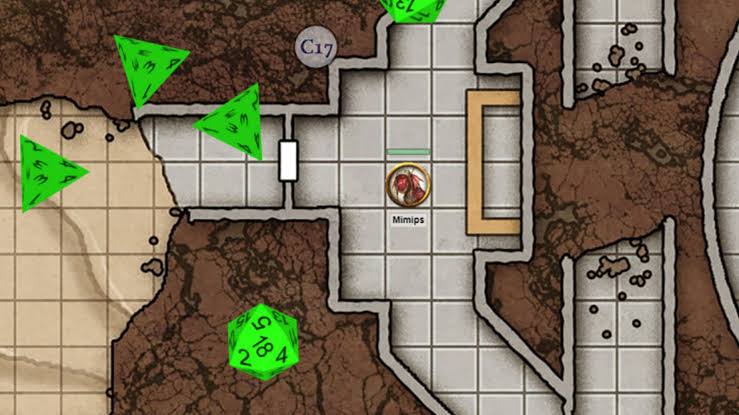
A virtual tabletop generally provides a shared visual environment where players can interact with maps, tokens, and other representations of the game world.
D&D Beyond's main strength lies in character management, digital content, and game information rather than replacing every function of a virtual tabletop.
It can be used alongside other online gaming tools.
For example, a group might communicate through a voice or video service, use a virtual tabletop for maps, and keep character sheets and rules references on D&D Beyond.
This modular approach allows players to build a gaming environment that suits their preferences.
Some groups prefer elaborate digital maps and visual effects. Others use simple video calls and focus almost entirely on conversation.
Both approaches can work.
9. The Advantages of D&D Beyond
D&D Beyond offers several important benefits that explain its popularity.
Convenience. Many essential resources are available through one account, reducing the need to search through multiple books and documents.
Automatic calculations. Character sheets handle many mechanical calculations, helping prevent common mistakes.
Accessibility for beginners. Guided character creation and searchable rules make the game less intimidating for newcomers.
Campaign organization. Digital character information and campaign tools help groups keep track of their adventures.
Quick rules references. Searching for a spell, ability, or piece of equipment is often faster than browsing a physical book.
Integration with online play. The platform can complement other digital tools used by remote groups.
These advantages make D&D Beyond particularly appealing to players who value organization and convenience.
It also lowers the barrier to entry for people who are unfamiliar with traditional tabletop role-playing games.
A new player can explore character options, understand basic statistics, and learn how different abilities work without immediately becoming overwhelmed by a large collection of rulebooks.
10. The Disadvantages: Is Digital D&D Always Better?
Despite its advantages, D&D Beyond is not perfect.
There are several reasons why some players prefer traditional gaming materials or use the platform only occasionally.
Dependence on Digital Access
A digital platform requires access to suitable devices and, depending on the feature, an internet connection.
This may be inconvenient during sessions where players prefer to keep electronics away from the table.
Physical books and printed character sheets can be used without worrying about batteries, software changes, or connectivity.
Additional Purchases
Digital access to official publications generally requires separate purchases unless the relevant content is included through another supported arrangement.
This means that players who already own physical books may need to consider whether buying the digital versions is worthwhile.
Changing Platform Features
Digital services evolve over time.
Features may be redesigned, moved, expanded, or changed as the platform develops. Users should not assume that every tool will remain available in exactly the same form indefinitely.
Less Tactile Experience
For some people, the physical side of tabletop gaming is part of its appeal.
Writing on a character sheet, turning pages, rolling dice, and arranging miniatures create a particular atmosphere.
A digital interface cannot completely reproduce that experience.
The Risk of Overcomplication
Technology can sometimes create additional distractions.
Players may spend more time adjusting digital sheets, browsing options, and managing interface settings than actually participating in the adventure.
The purpose of a digital tool is to support the game, not dominate it.
11. Is D&D Beyond Free?
One of the most common questions about the platform concerns its pricing.
D&D Beyond offers free account access and a selection of basic tools, while additional content and certain advanced features may require purchases or a subscription.
The precise availability of features can change, so players should consult the current official pricing and account information before making a decision.
For someone who is just beginning their D&D journey, starting with the free tools is often a sensible approach.
There is no need to purchase an extensive digital library immediately.
A new player can first explore the available character-building options, learn the basic rules, and decide whether the platform fits their preferred way of playing.
Subscriptions and additional books should be considered only when they provide something the group genuinely needs.
This is particularly important in a hobby where it is easy to spend more money on accessories and supplements than necessary.
12. D&D Beyond and the Future of Tabletop Role-Playing Games
The development of D&D Beyond reflects a broader transformation within the tabletop RPG hobby.
For a long time, tabletop role-playing games were associated almost exclusively with physical books, dice, maps, and face-to-face meetings.
Today, the hobby exists in a much more diverse environment.
Some groups play entirely online. Others meet in person but use digital character sheets. Some combine physical books with virtual maps, automated dice rollers, and shared campaign documents.
D&D Beyond represents one of the most visible examples of this hybrid approach.
Digital tools can make the game more accessible, especially for people who might otherwise struggle with complex rules or organizing a regular group.
They can also help experienced Dungeon Masters manage increasingly ambitious campaigns.
However, there is an important principle that should not be forgotten.
The value of Dungeons & Dragons does not come from the technology used to play it.
It comes from the people around the table, the decisions they make, the characters they develop, and the stories they create together.
A digital platform can make those experiences easier to organize, but it cannot replace the imagination and cooperation at the heart of the hobby.
Conclusion: Is D&D Beyond Worth Using?
D&D Beyond has become an important part of the modern Dungeons & Dragons experience.
Its digital rulebooks, character builder, campaign tools, and dice functionality provide practical solutions to many of the organizational challenges associated with tabletop gaming.
For beginners, it can make the first steps into D&D easier. For experienced players, it offers a convenient way to manage characters and access rules. For Dungeon Masters, it can reduce preparation time and help keep campaigns organized.
Nevertheless, it is not essential.
Dungeons & Dragons can still be played with physical books, handwritten character sheets, and ordinary dice. The traditional approach remains just as valid as a fully digital setup.
The best way to use D&D Beyond is to treat it as a tool rather than a requirement.
Take advantage of the features that genuinely improve your gaming experience, avoid unnecessary purchases, and remember why you started playing in the first place.
After all, the most important part of Dungeons & Dragons has never been the character sheet, the rulebook, or the software.
It has always been the adventure shared by the people playing the game.