D&D Online: How to Play Dungeons & Dragons Over the Internet
How to Play Dungeons & Dragons Over the Internet
No shared table? No problem. Discover how online tools, virtual tabletops, digital character sheets, and voice communication have made Dungeons & Dragons accessible to players around the world.
For decades, Dungeons & Dragons has been associated with a familiar image: a group of friends gathered around a table, surrounded by character sheets, dice, rulebooks, snacks, and miniature figures. One person describes a mysterious world while the others decide how their characters will explore it. It is an experience built around imagination, conversation, and cooperation.
But what happens when the players live in different cities, countries, or even continents?
The answer is simple: D&D can be played online.
The development of digital communication and virtual tabletop platforms has made it possible to run complete Dungeons & Dragons campaigns without meeting in person. Players can explore dungeons, fight fantasy creatures, manage their characters, and participate in long-running adventures through the internet.
Online D&D is no longer an unusual alternative to traditional tabletop gaming. For many groups, it has become their preferred way to play.
However, playing remotely requires a slightly different approach. Choosing the right tools, organizing communication, preparing digital materials, and maintaining the atmosphere of a shared adventure are all important considerations.
Let's explore how online Dungeons & Dragons works, what tools are available, and how to organize your first digital campaign.
1. What Is D&D Online?
D&D Online refers to playing Dungeons & Dragons through the internet instead of gathering physically around a table.
The basic rules remain the same. Players still create characters, interact with fictional environments, make decisions, roll dice, and cooperate to overcome challenges.
The main difference is the way the game is presented and organized.
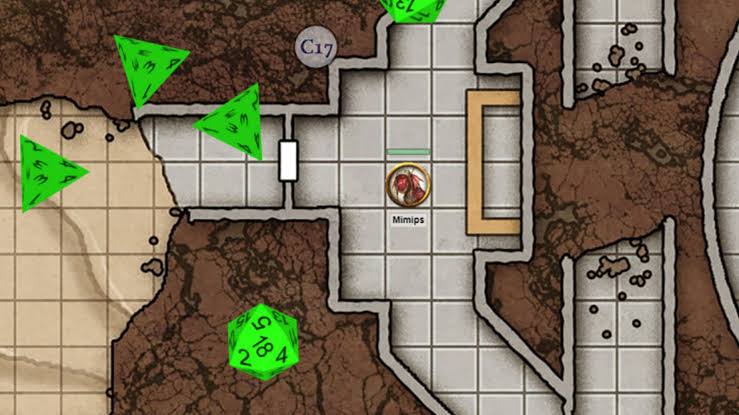
Instead of using a physical map, a Dungeon Master might display a digital battle map. Instead of passing character sheets around the table, players use online character builders. Instead of speaking face to face, the group communicates through voice or video calls.
An online session can include:
A Dungeon Master controlling the adventure.
Players managing their individual characters.
Digital character sheets.
Virtual dice rollers.
Online maps and tokens.
Voice or video communication.
Shared campaign notes and documents.
Some groups use only a few simple digital tools. Others create elaborate virtual environments with animated maps, lighting effects, music, and automated game mechanics.
Neither approach is inherently better.
The important thing is that everyone can communicate comfortably and participate in the adventure.
2. What Do You Need to Play D&D Online?
One of the greatest advantages of online Dungeons & Dragons is that the basic requirements are relatively modest.
You do not need an expensive gaming computer or a complicated collection of software.
For a simple online campaign, the group generally needs:
A stable internet connection. Reliable connectivity makes communication and access to shared materials easier.
A microphone. Voice communication is usually the most important technical requirement. Players need to hear one another and communicate their decisions clearly.
A device. A computer is often the most convenient option, especially when using virtual tabletops, although some tools also support mobile devices and tablets.
A communication platform. The group needs a way to talk during sessions.
A virtual tabletop or shared gaming space. This is optional for groups that prefer theatre-of-the-mind gameplay, but useful when maps and tokens are important.
Character sheets and rules. These can be digital or physical, depending on the group's preferences.
The Dungeon Master may also need additional materials, such as adventure notes, maps, creature statistics, and descriptions of important locations.
However, beginners should avoid purchasing or installing too many tools before playing their first session.
A simple setup is often the best way to discover what the group actually needs.
3. The Best Tools for Playing D&D Online
There are several platforms that can support online Dungeons & Dragons. Each offers a slightly different approach, and the best choice depends on the group's expectations.
D&D Beyond
<em>D&D Beyond</em> is an official digital platform for Dungeons & Dragons.
It provides digital rulebooks, character creation tools, character sheets, campaign-related features, and other resources.
Its main strength is organization.
Players can manage their characters, check abilities, browse spells, and access eligible digital publications through one account.
For Dungeon Masters, it can be useful when preparing adventures and keeping track of player characters.
However, D&D Beyond should not be confused with a complete virtual tabletop. It can complement online maps and communication software, but groups may need additional tools for those purposes.
Roll20
<em>Roll20</em> is one of the best-known virtual tabletop platforms.
It allows groups to create online gaming spaces with maps, tokens, character sheets, dice tools, and other features.
Dungeon Masters can prepare encounters, display locations, and manage visual elements of an adventure.
Roll20 supports multiple tabletop role-playing games, making it useful for people who enjoy experimenting with different systems.
Its browser-based approach also makes it relatively accessible to groups that do not want to install complicated software.
Foundry Virtual Tabletop
<em>Foundry Virtual Tabletop</em> is a highly customizable platform designed for online role-playing games.
It offers extensive options for maps, lighting, automation, character sheets, and game systems.
One of its greatest strengths is flexibility.
Dungeon Masters who enjoy technical preparation can customize their gaming environment and create a highly tailored experience.
However, Foundry may require more initial setup than simpler alternatives. It is particularly attractive to groups that enjoy experimenting with virtual tabletop features and are comfortable learning new software.
Fantasy Grounds
<em>Fantasy Grounds</em> is another established virtual tabletop platform.
It provides tools for managing characters, encounters, maps, rules, and campaign materials.
It is designed to support structured tabletop gameplay, including automation of many mechanical processes.
For groups that enjoy a more rules-oriented digital experience, it can be an interesting option.
As with other platforms, the available features and content depend on the software edition, purchases, and licensing arrangements.
Discord
<em>Discord</em> is primarily a communication platform rather than a virtual tabletop.
Nevertheless, it has become a popular choice among online RPG groups.
Players can use voice channels to communicate during sessions, text channels to share notes, and dedicated spaces to organize campaign discussions.
It works particularly well when combined with another platform for character sheets or maps.
For a group that prefers simple gameplay without elaborate digital environments, Discord and a shared character sheet may be all that is necessary.
4. How to Choose the Right Virtual Tabletop
Choosing a platform can be surprisingly difficult.
There are many options, and each one offers different features, interfaces, and levels of customization.
Instead of searching for the platform with the largest number of features, consider what your group actually needs.
If your players are beginners, simplicity should be a priority.
A complicated system may create unnecessary frustration before the group has even completed its first adventure.
If your campaign focuses on tactical encounters, a platform with detailed maps, tokens, and combat tools may be useful.
If your group prefers storytelling, exploration, and character interaction, a simple communication service combined with digital character sheets may be sufficient.
Consider the following questions:
Is the platform easy for everyone to use?
Does it support the version of D&D your group wants to play?
Can players access it using their existing devices?
Are the necessary features free or paid?
Does the Dungeon Master feel comfortable preparing adventures with it?
Will the software support the group's preferred style of play?
It is also worth testing a platform before committing to a long campaign.
A short introductory session can reveal whether the interface is comfortable and whether everyone can use the tools without constant technical assistance.
5. How to Run Combat in Online D&D
Combat is one of the areas where online Dungeons & Dragons can feel quite different from traditional tabletop gaming.
In a physical session, players can see the miniature figures, measure distances, and point at locations on a map.
Online, these activities are usually represented through digital tools.
A virtual tabletop can display a battle map containing:
Player character tokens.
Opponent tokens.
Terrain and obstacles.
Important environmental features.
Movement and positioning information.
Players move their tokens to indicate their characters' positions.
The Dungeon Master controls the encounter and describes what is happening.
Many platforms also include digital dice rollers and tools for tracking important combat statistics.
This can make complicated encounters easier to manage, particularly when several characters and opponents are involved.
However, online combat introduces one potential problem: excessive reliance on automation.
Automated systems can calculate certain results, but they do not understand the narrative significance of every action.
A player should still describe what their character is attempting to accomplish.
A well-run encounter is more than a sequence of numbers and token movements. It is a dramatic situation in which decisions matter.
The best Dungeon Masters use digital tools to support the action rather than allowing the interface to replace storytelling.
6. Theatre of the Mind: Playing Without Digital Maps
Not every online D&D campaign needs a virtual tabletop.
In fact, some groups prefer to play without visual maps altogether.
This approach is commonly called theatre of the mind.
Instead of representing every location with tokens and grids, the Dungeon Master describes the environment verbally.
For example:
"You enter an abandoned library. Tall shelves surround the central room, and several narrow passages disappear into darkness. A staircase leads to a balcony overlooking the entrance."
The players imagine the location and explain how their characters interact with it.
When combat begins, the Dungeon Master describes the approximate positions of characters and opponents.
This approach offers several advantages.
It reduces technical preparation, encourages imagination, and allows the group to focus on narrative rather than positioning.
It is particularly effective for social encounters, exploration, mysteries, and scenes where exact distances are not important.
However, theatre of the mind requires clear communication.
The Dungeon Master should describe important environmental details carefully, especially when the positioning of characters influences the outcome of an encounter.
Online groups may also find it useful to maintain simple shared notes or sketches when a location becomes difficult to visualize.
7. How to Create an Engaging Online Campaign
Running an online campaign requires more than transferring a traditional adventure onto a digital platform.
The Dungeon Master must consider the specific challenges of remote communication.
In a physical session, players can often recognize when someone wants to speak, notice reactions, and naturally participate in conversations.
Online, these social signals can be less obvious.
Several practical principles can make remote campaigns more enjoyable.
Establish a Regular Schedule
Consistency is important.
A group that plays every week or every two weeks is often better positioned to maintain campaign continuity than one that meets unpredictably.
Choose a schedule that works for everyone and respect the agreed starting time.
Keep Communication Clear
Players should know how to indicate that they want to speak, especially during busy scenes.
It may also be helpful to establish simple conventions for speaking in character, asking rules questions, and communicating outside the fictional world.
Prepare Digital Materials in Advance
Dungeon Masters should test maps, character sheets, and other important materials before the session.
Technical problems are inevitable, but basic preparation can prevent unnecessary interruptions.
Avoid Excessive Screen Clutter
More digital features do not automatically create a better experience.
A clean interface, readable maps, and accessible character information are often more useful than elaborate visual effects.
Give Everyone Space to Participate
Online sessions can sometimes become dominated by the most confident speakers.
The Dungeon Master should make sure that quieter players have opportunities to contribute, particularly during important decisions and social encounters.
A successful campaign is a collaborative experience, not a performance by one person.
8. Playing D&D Online with Friends in Different Countries
One of the most remarkable advantages of online tabletop gaming is its ability to connect people across geographical boundaries.
A group no longer needs to live in the same neighborhood or attend the same local gaming club.
Friends who move to different cities can continue their campaigns. Players can meet people with similar interests from other countries. Gaming communities can organize international sessions without requiring physical travel.
However, international groups face an additional challenge: time zones.
A session that begins in the evening for one player may take place much later for another.
The best solution is to agree on a schedule that respects everyone's daily responsibilities.
It is also important to consider language differences.
English is commonly used in international RPG communities, but a group may prefer another shared language.
The most important thing is that everyone feels comfortable communicating.
Dungeons & Dragons is built around cooperation. Players should not feel pressured to speak perfectly or possess extensive knowledge of fantasy terminology.
9. Online D&D for Beginners
Can someone learn Dungeons & Dragons entirely online?
Absolutely.
In many ways, online play can be an excellent introduction to the hobby.
Beginners can use digital character sheets that calculate many statistics automatically. They can search for rules without interrupting the session for too long, and they can join communities where experienced players are willing to explain the basics.
However, new players should avoid trying to learn everything before their first session.
D&D is best understood through practice.
Start with a simple character, learn the basic dice mechanics, and focus on understanding what your character can do.
You do not need to memorize every spell, combat rule, or equipment option.
A beginner-friendly adventure is usually the best starting point.
The Dungeon Master should also explain the basic expectations before the campaign begins.
Players should understand how communication works, what materials they need, and how the group approaches rules questions.
Most importantly, beginners should remember that making mistakes is part of learning.
Experienced players were beginners once, too.
10. The Advantages of Playing D&D Online
Online Dungeons & Dragons offers several significant benefits.
Accessibility. Players can participate without traveling to a shared location.
Geographical freedom. Friends from different cities or countries can play together.
Digital organization. Character sheets, campaign notes, and other materials can be stored and accessed online.
Visual possibilities. Virtual tabletops can provide detailed maps, tokens, lighting, and other visual elements.
Convenient scheduling. Online play can make it easier for people with busy schedules to find opportunities to meet.
Community access. Players can discover groups, meet new people, and participate in campaigns beyond their immediate social circles.
For many people, these advantages make online D&D the most practical way to enjoy the hobby.
11. The Disadvantages of Online D&D
Despite its convenience, online play also has limitations.
Technical Problems
Internet interruptions, microphone failures, software updates, and platform issues can interrupt a session.
A group should have a simple backup communication method in case the primary platform stops working.
Less Physical Interaction
Some players miss the atmosphere of a shared table.
Physical dice, printed maps, miniatures, and spontaneous conversations create a social experience that digital tools cannot fully reproduce.
Screen Fatigue
Long sessions in front of a computer can become tiring.
This is particularly noticeable during campaigns that involve several hours of continuous online interaction.
Regular breaks can help maintain concentration.
More Preparation for Dungeon Masters
A highly detailed virtual tabletop may require significant preparation.
Maps, tokens, lighting, encounters, and other digital elements can consume considerable time.
Dungeon Masters should be careful not to spend so much time preparing the technical environment that they neglect the adventure itself.
Digital Distractions
Notifications, other browser tabs, and unrelated applications can interfere with concentration.
Players should treat online sessions with the same respect they would show a physical gaming meeting.
12. Online D&D vs. Traditional Tabletop Gaming
Is online D&D better than playing around a physical table?
There is no universal answer.
Both formats offer different strengths.
Traditional tabletop gaming provides direct social interaction, physical materials, and a distinctive atmosphere.
Online D&D offers convenience, geographical freedom, and access to digital tools.
The experience also depends heavily on the group.
A campaign with excellent players and an engaging Dungeon Master can be memorable regardless of whether everyone is sitting in the same room.
Likewise, a poorly organized campaign can become frustrating even when played with expensive equipment and impressive digital maps.
The most important element is the quality of the shared experience.
Many groups also combine both formats.
They may play online when meeting physically is impossible and organize occasional in-person sessions for special adventures or campaign finales.
This hybrid approach can offer the advantages of both worlds.
13. Tips for Your First Online D&D Session
If you are preparing to play Dungeons & Dragons online for the first time, a little preparation can make a significant difference.
Here are several recommendations:
Choose a simple platform. Avoid complicated software until you understand what your group needs.
Test your microphone. Make sure everyone can hear you clearly.
Prepare your character sheet. Check that your abilities, equipment, and basic statistics are available.
Learn the basic dice mechanics. Understanding the d20 system will make your first session easier.
Agree on communication rules. Decide how players should indicate that they want to speak.
Prepare a backup plan. Have another way to communicate if the main platform becomes unavailable.
Take breaks. Long online sessions can be tiring.
Focus on the adventure. Do not allow technical details to overshadow the actual role-playing experience.
A first online session does not need to be elaborate.
A short adventure with a simple objective is often enough to introduce everyone to the format.
Conclusion: D&D Online Is Still About the People Behind the Characters
Online Dungeons & Dragons has opened the hobby to a much wider audience.
Through virtual tabletops, digital character sheets, communication platforms, and online communities, players can participate in adventures regardless of where they live.
The technology offers considerable convenience. It makes campaign organization easier, provides new visual possibilities, and allows groups to maintain friendships across geographical distances.
Nevertheless, it is important to remember what makes Dungeons & Dragons special.
It is not the software, the digital maps, or the number of automated features available.
It is the shared experience of creating a story together.
A simple online session with a few friends, a handful of dice, and an interesting adventure can be just as memorable as an elaborate campaign played around a physical table.
Whether you prefer Roll20, Foundry Virtual Tabletop, D&D Beyond, Discord, or a combination of different tools, the principle remains the same.
Gather your party, prepare your characters, and begin the adventure.
The world may exist on a screen, but the imagination behind it belongs to everyone.